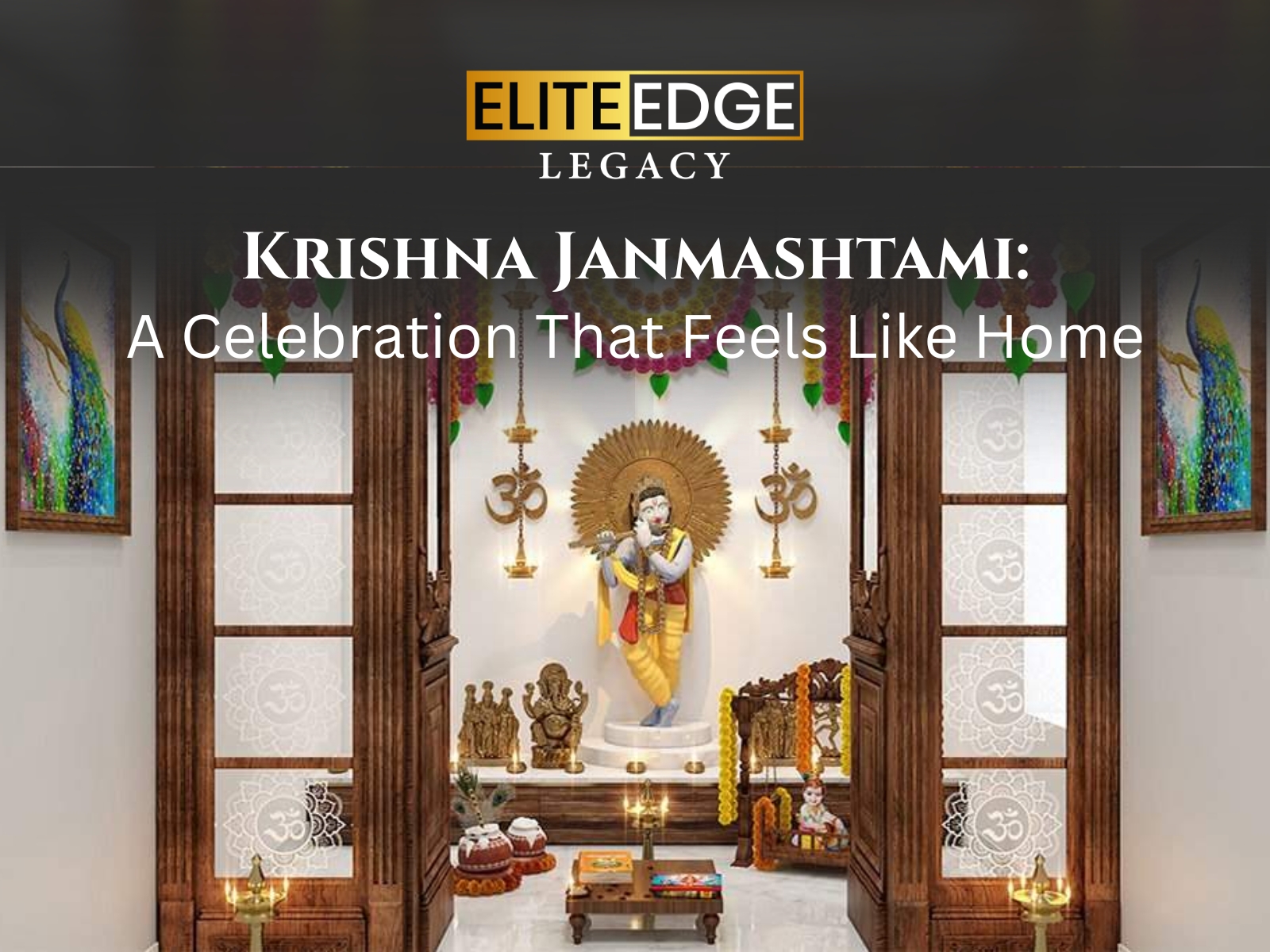
Krishna Janmashtami: A Celebration That Feels Like Home
There are festivals that you wait for. And then there are festivals that find you, wrap around you, and remind you of where you truly belong. Krishna Janmashtami is one of those rare days. You don’t just celebrate it. You live it.
It starts before sunrise. The atmosphere seems fuller, as if it knew what was to follow. The kitchen smells richly of cardamom and ghee. A hush fills the streets as if on every corner they are quietly awaiting the night ahead. Somewhere in the distance, the gentle trills of a flute on loudspeakers waft down between corridors. Suddenly, you are also eight years old, waiting for your mother to drape a saree just a bit more neatly than usual while your father fusses over the decoration of a small idol in the living room.
In this blog, we’ll share the magic of Krishna Janmashtami and how that joy lives in the homes you deserve. Keep on reading to feel the celebration come alive.
The Story That Travels Through Generations
The story of Krishna’s birth is not just mythology; it’s Indian history. It’s a tale told a thousand ways, each version carrying the storyteller’s own love and memory. We all know how he was born in Mathura on a stormy night, carried across the Yamuna to safety, and grew up in the playful chaos of Vrindavan. But every home tells it differently. Some make it a bedtime story for children. Some weave it into songs that echo through temples. And some, without even trying, make it part of the walls, the floor, and the very air of their home.
In luxury living, stories like these matter more than we realize. A home is not just where you keep your furniture. It’s where your family’s stories breathe. Where festivals don’t just happen in a calendar but live on in the way your home feels.
Preparing for the Midnight Hour
Krishna Janmashtami has a strange rhythm. Unlike other festivals, its main moment is not in the morning but at midnight. All day, there’s a slow build-up. Children rehearse for skits about Krishna’s life for school functions. Women gather in groups to tie fresh garlands. The men check the lighting, the sound system, and the arrangements for prasad. And the younger crowd? They are probably eyeing the dahi handi that will be broken later in the evening.
In high-end communities, this preparation takes on a grand scale. The temple inside the complex is lit up with intricate floral arrangements. Open courtyards are dressed with colorful canopies. Security and staff are busy ensuring every guest feels at home. It’s the kind of environment where tradition and comfort don’t compete. They complete each other.
This Festival Belongs to Every Corner
In small towns, Janmashtami is loud and unmissable. In cities, it’s sometimes quieter. But in a home designed with care, the festival finds space to bloom no matter where you are. A balcony can turn into a stage for the kids’ performance. A dining hall can glow with a hundred diyas. Even a living room can become a temple when the right people are around.
Luxury real estate isn’t just about marble flooring or tall ceilings. It’s about how those spaces allow life to happen. On Krishna Janmashtami, you see it clearly. The high windows let moonlight in during the midnight aarti. The open lawns invite neighbors to gather for singing bhajans. The well-planned kitchens make it easy to prepare multiple prasad dishes without chaos. Every corner of the house joins the celebration.
What Krishna Janmashtami is about
Krishna Janmashtami is not just about remembering a divine birth. It’s about feeling a connection across time. When your home gives you space to host family, welcome friends, and involve your neighbors, you’re not just living in comfort.
You’re becoming a part of something bigger. You’re turning your home into a living memory, the kind your children will remember years later when they tell their own children about “how Janmashtami felt at our home.”
The Midnight Moment
By evening, the music starts. Somewhere, a group is singing bhajans. In another corner, the children, dressed as Krishna and Radha, giggle before the show. Makhan, malpua, and laddoos scent the air.
The clock inches towards midnight. Conversations slow down. The temple bells start ringing. People gather in the main hall. The idol of Baal Krishna, dressed in yellow silk, sits on a swing covered in flowers. At exactly twelve, the priest begins the aarti. The air fills with chanting. The sound is deep, almost like it is coming from the walls themselves.
And then, in that moment, you feel it, not as a ritual, but as a heartbeat. You look around. Your family is here. Your friends are here. The home you built, the life you shaped, is holding everyone together.
Carrying the Spirit Forward
After the prayers, the celebration doesn’t end. People eat, talk, and laugh. Children run around, high on sugar from the sweets. The elders sit together, recalling Janmashtamis from decades ago. And somewhere inside you, there is that quiet satisfaction that this home let the night happen just the way it was supposed to.
It is not simply a possession of rare things. It is about having safe spaces where moments like these occur spontaneously. Where the exhibitionist presence of tradition is possible. Where walls hear the same songs that were once sung by the grandparents.
Why Homes Matter in Keeping Traditions Alive
In cities like Gurgaon, life moves quickly. People travel for work, shift homes often, and sometimes lose touch with old customs. But when you choose a home that feels personal, that gives you the freedom to host and celebrate, you protect those customs without even trying.
For families who value both tradition and modern comfort, this is where luxury real estate steps in. It gives you the stage for your life’s celebrations. It ensures that festivals don’t get lost in the noise of busy schedules. And it helps you pass on your stories in the most natural way possible by living them.
Looking Ahead
Next Krishna Janmashtami will come. The flowers will be bought, the bhajans sung, and the sweets made. But the difference will be in where you experience it. Will it be in a space that limits you, or in a home that sets the scene for a lifetime of memories?
Choosing the right home is not just a financial decision. It’s a cultural one. Because the truth is, we don’t just live in our homes. Our festivals do too. And when the home is right, every celebration, whether small or grand, feels complete.
So as we prepare for another Krishna Janmashtami, may we remember that traditions live not in time, but in space. And the right space can make even a single night feel like it belongs to forever.